Showing posts with label New England Aster. Show all posts

Saturday, September 27, 2025

Fall Fireworks

Monday marked the astronomical arrival of fall.

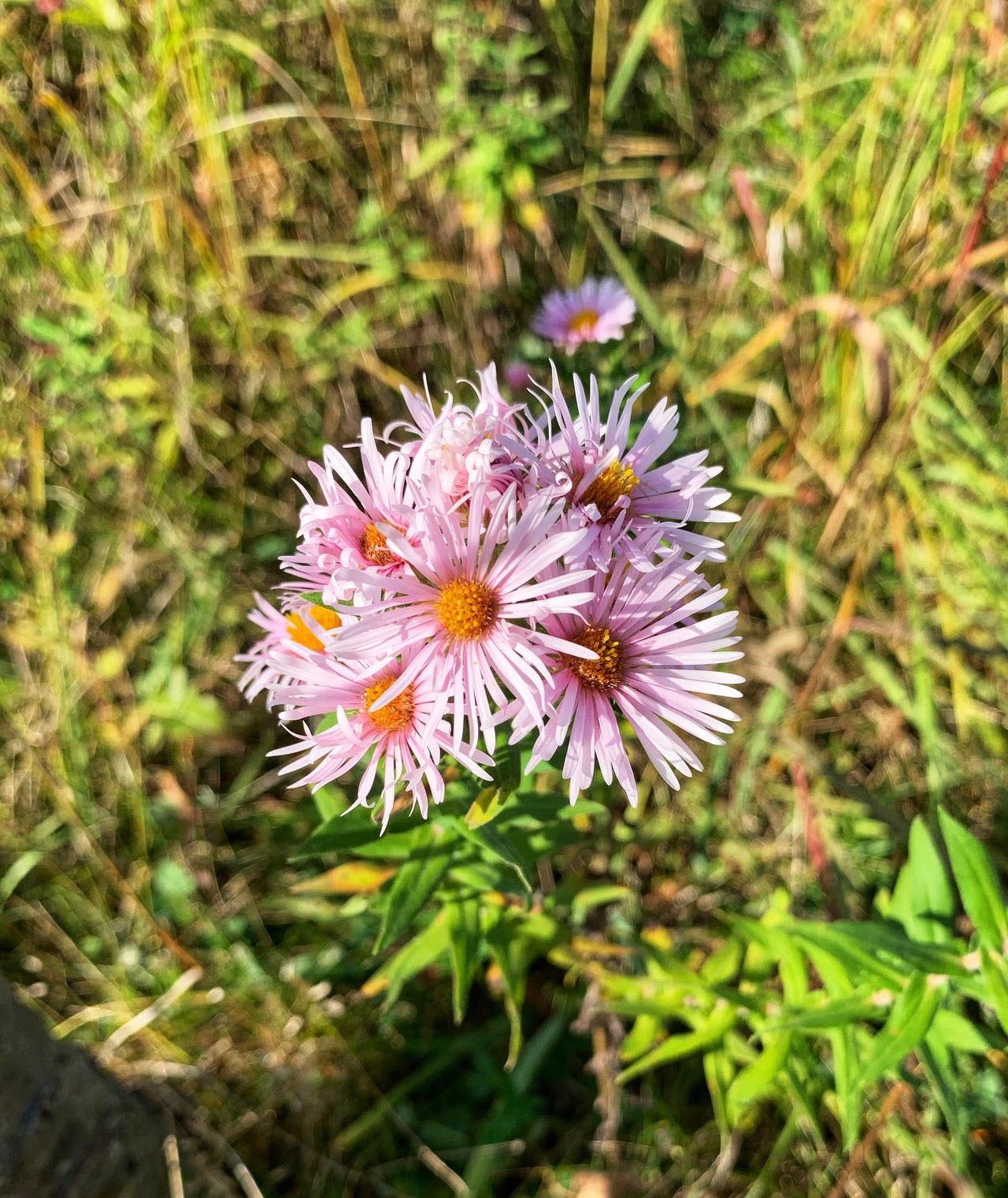
From our walk the other day the asters have exploded like fireworks.


Further evidence of autumn.... 

Monday, September 23, 2024

Fall Colors

From one of our walks over the weekend the New England asters were showing-off...


Friday, September 13, 2024

Autumn Blooms

Another sure sign of autumn.

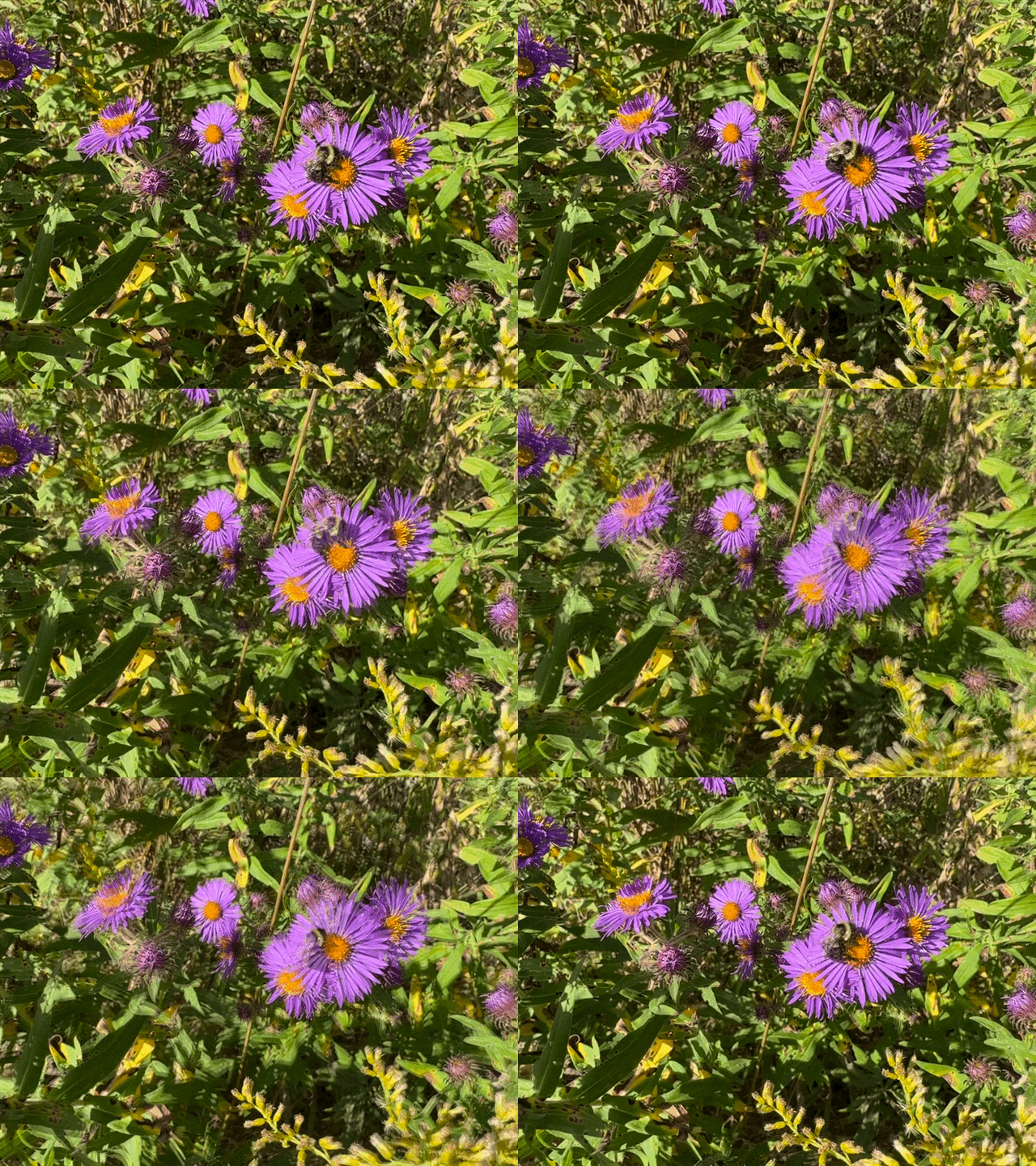
New England asters.

Bees are bonus.....


Wednesday, September 27, 2023

Fall Colors

While on my daily walk with the dog I've begun to notice some of the trees are beginning to turn on their fall foliage.  Nevertheless, the fall colors are not restricted to tree leaves.  The fall flowers are really pulling-out the stops with a color palette that is attracting the bumble bees, honey bees and other pollinators on the landscape.

From one of our recent walks there was this...


Tuesday, September 12, 2023

Fall Blooms


The pup gets a half mile walk every day before lunch trailing a check cord. This gives her ample opportunity to follow her nose and explore.  And we work on fundamental field commands.  Afterwards the both of us nap for an hour.  Yes, no shame in a snooze. 


There is most definitely a whiff of autumn in the air and according to my records these are behind schedule for 2023. 

In any event from our walk this morning there was this. Further evidence of the changing of the seasons….

Tuesday, October 4, 2022

Wildflower Walk


Meet Aster novae-angliae - commonly known at the New England Aster.


This native plant grows all-over around here in sun, shade and moist spots.  A late bloomer it really shows-off when autumn rolls-around.  We included it in our prairie seed mix decades-ago.  And now it is found absolutely everywhere.


The coloring can range from white to blue although ours generally are pink to purple with variations of  blue-violet in between. 


It's a terrific nectar plan and I've been busy photographing many of the bees and butterflies paying it a visit

Thursday, October 21, 2021

Handheld Device Photography


I was cleaning-out photos from my phone yesterday and came across a couple worthy of sharing.

The aster and butterfly GIF (animated image) were taken while walking the dog on October 5th. 

In the two-week interval that has passed since then both the asters and butterflies have gone away.  

Poof!

Gone.


The moon rise photo was taken a couple of days ago - Wednesday the 20th.

The composition is interesting - to me at least.

The moon is rising in the east as the sun is beginning to set in the west.

The result is a blue sky and back-lit pines framing our planetary satellite while the low light from the sunset is highlighting the fall colors in the background.  

The full October moon is called a Hunter's Moon.

Thursday, October 8, 2020

Fall Flowers - Part 2

From our walk there continue to be opportunities to exercise an immersive experience in the natural world around me.  


Lygaeus Kalmii - the Small Eastern Milkweed Bug – is found throughout the US. This critter dines on milkweed but is immune to the toxic chemicals in the plant.  And just as with the monarch butterfly the regular diet of milkweed also endows this beetle with the same properties making it toxic to other predators. Who knew? 


Of course there are New England asters as far as they eye can see.


Nevertheless, some golds of autumn too. 

Stiff goldenrod .....


And ginormous patches of sneeze weed....


Tuesday, October 6, 2020

Fall Flowers - Part 1


From our walk this morning there were ample opportunities to indulge my retirement vow of paying closer attention to the natural world around me.


Aster novae-angliae - commonly known as the New England Aster - has been blooming for about a month now.      


This native plant grows all-over around here in sun, shade and moist spots.  A late bloomer it really shows-off when autumn rolls-around.  We included it in our prairie seed mix decades-ago.


The coloring can range from white to blue although ours generally are pink to purple with variations of  blue in between.       


It's a terrific nectar plan and I've been busy photographing many of the bees and butterflies paying it a visit.  

Can you find the honey bee in the photo?

Thursday, September 24, 2020

Autumn Colors

True to my retirement promise of paying closer attention to what is around me in the natural world there were some small, colorful, delights today.

From our walk this morning there was this...

A couple of variations of New England aster


The diminutive small white aster


And a scarlet oak seedling 

Wednesday, September 23, 2020

King of the Prairie

 
Five months have passed since we conducted a controlled burn out back and the prairie planting continues to amaze as different plant species come into their seasonal glory. 


Big bluestem also called ‘Turkey Foot’ is one of the Four Horsemen of North America’s tallgrass prairie (the other three are little bluestem, Indian grass and switch grass)  


Some call it The King of the Prairie - a quintessential prairie grass.  No wonder - it towers over seven feet in height in some places. 

From our walk today it is rather breathtaking in the cool of autumn. 

Of course the New England aster and stiff goldenrod are rather showy too. Among the last remaining nectar sources for hungry pollinators.


Monday, September 14, 2020

Fall Flower

Meet Aster novae-angliae - commonly known as the New England Aster.      


This native plant grows all-over around here in sun, shade and moist spots.  A late bloomer it really shows-off when autumn rolls-around.  We included it in our prairie seed mix decades-ago.

The coloring can range from white to blue although ours generally are pink to purple with variations of  blue in between.  

It's a terrific nectar plan and I've been busy photographing many of the bees and butterflies paying it a visit.  


Cabbage butterfly upper with a couple of alfalfa butterflies below. 


The monarch butterfly likes it in particular and they are tanking-up on nectar as they prepare to depart on their migration south.