Showing posts with label Poults. Show all posts

Thursday, September 26, 2024

2024 Recruits

For the longest time I fretted-over the fact that I hadn't seen any turkey poults (young); either in person or on the trail cameras.  The wet, wet spring weather is good for suppressing infestations of spongy (gypsy) moth caterpillars but generally not so good for ground-nesting birds.  Then, all of a sudden, the turkeys materialized.  Hens and their newly-hatched young'uns.

Many of the poults were smaller - implying they were hatchlings from a second laying - and going into the fall their are certainly more grouse-sized poults than what would ordinarily be observed.

Better smaller than none at all.  Nature works that way occasionally.  Come to think of it I'm seeing some awfully small fawns too.

From the trail camera trap line are these photos and videos....

Small birds

A solitary poult


Some larger birds

And a smallish fawn


Thursday, September 12, 2024

More Brood Flocks

Fresh from the trail camera trapline are mama hens tending to their flock of turkey poults....


Wednesday, September 11, 2024

Brood Flocks

For awhile I was genuinely concerned that I hadn't seen any turkey poults on the trail cameras this spring and summer.

Plenty of adults; but no babies.

I figured maybe the torrential monsoons in the spring caused a hatch failure.  And the second laying.  Or maybe the burgeoning population of predators (coyotes, racoon, skunk and fox) got what was left.

Then all of a sudden when I ran the trail camera trapline towards the end of August,  Voila!

There they were.  All sorts of them.


Hens along with some good-sized youngsters to put my mind at ease.

I haven't a clue where they've been hanging-out; but I guess I shouldn't fret so much.


Tough bird the turkey is....


Tuesday, September 19, 2023

Wildlife Selfies

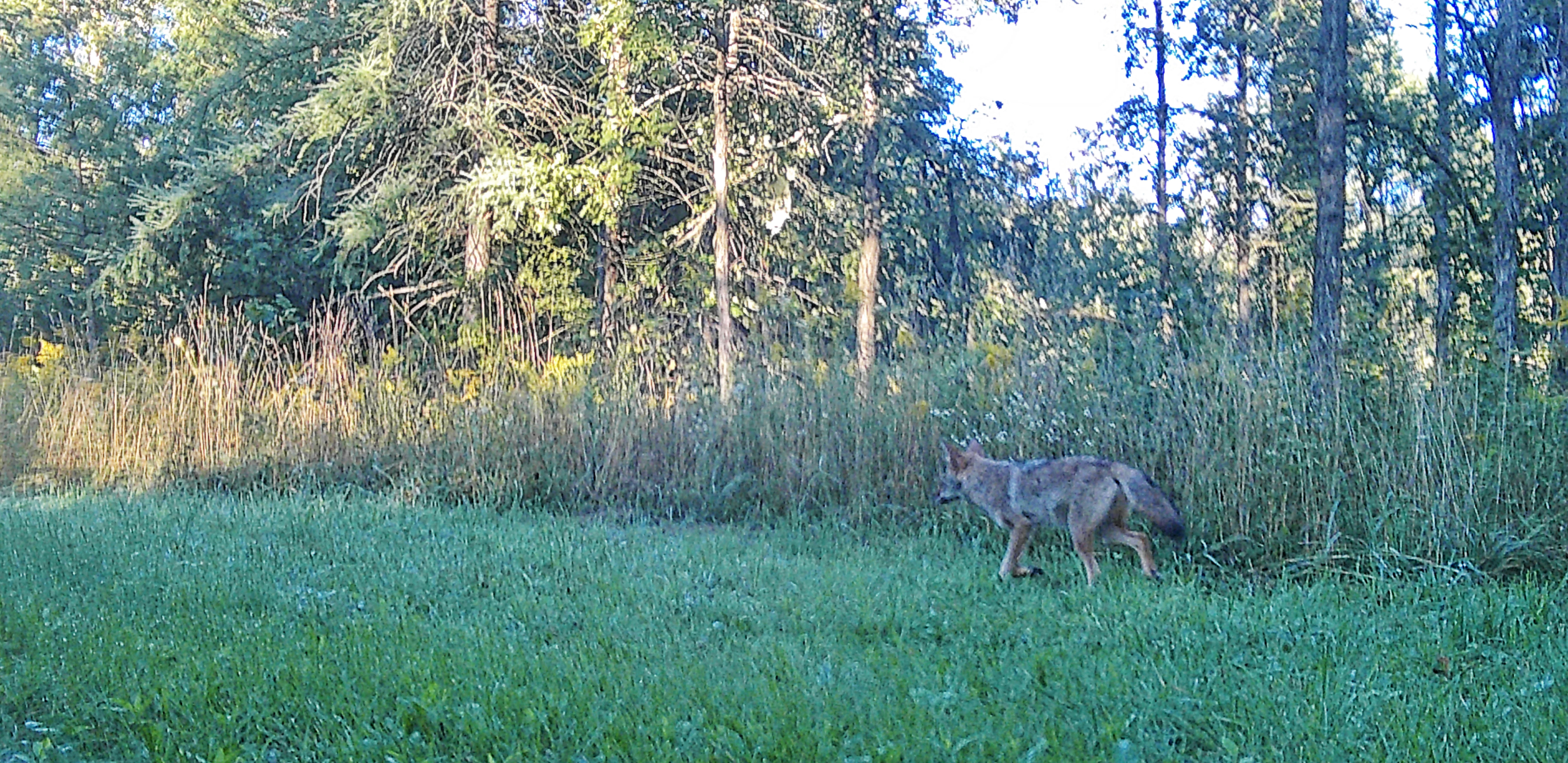
From the trail camera trap line there are velvet bucks, a coyote, a brood flock and a groundskeeper....


Monday, October 10, 2022

Talkin' Turkey


From the trail cameras it is encouraging to see this year's turkey poult recruits grow into juveniles and young adults.

Their mamas ride herd on them and keep them in line.


Wednesday, September 28, 2022

More Critters

From the trail camera there is more.  Including...

Many coyotes


Another fawn

And another brood flock 


Saturday, September 24, 2022

Critters

From the trail cameras there are...

Mama and the twins


A brood flock


A fawn

And the obligatory coyote


Sunday, September 11, 2022

Talking Turkey

While out brushing trails the other day I spied a mama whitetail and her fawn observe my work.


Same for a couple of brood flocks of resident turkeys.  


It would appear they approve.

And they're certainly not bothered by the clattering noise....

Tuesday, August 9, 2022

At Long Last

I was beginning to wonder when some turkey poults might show-up on the trail cameras.  There has been absolutely nothing for a spell.  Alien abduction?  Natch.  More likely too many predators that disturb nests and eat turkey eggs.

Finally there was this.


Photo is July 22 and the video is July 21.  And no way to know if they are the same brood.  That-aside it is exceedingly late.  And judging from the size of these poults this might just be one of the latest renestings I have been witness-to.

At long last.....

Sunday, September 5, 2021

Brood Flock

While not scarce - turkeys around these parts have not been as common as in years past.  Brood flocks in particular.

Last weekend Jill spied a brood flock of three adult hens and their poults cruising thru the backyard.  Because it was a mowed expanse of lawn it is highly unlikely that we missed any additional hens or little ones.   However, between the three of them there were only a small handful of young.  One hen had only a single sole poult in tow.

Low probability (poor) hatch this spring?  

Predation?

It's not likely I'm mistaken about the anecdotal evidence.  I'm sure it's the same for the neighbors.  I'll have to ask around.

Anyway, I was reminded of this short, silent video vignette taken recently.  One of the very few with mama and her brood.....


Wednesday, September 16, 2020

Birds of a Feather...

...Flock Together.

Wild turkeys ordinarily move around in flocks.  There are bachelor flocks populated with mature gobblers.  There are flocks of jakes - juvenile male birds that rove-around like a gang of unruly teenagers.  And when a mature gobbler has romance on his mind he will form a mating flock with five to fifteen hens.  Aside from the carnal advantages that may spring from the care and maintenance of your own personal harem - turkey flocks primarily exist to provide safety in numbers.  

The wild turkey's single most powerful sense is eyesight.  They view their world in living color and their daytime visual acuity is three times better than ours.  Furthermore, a single bird's field of vision covers 270 degrees.  If you had an inclination to sneak-up on a flock of a dozen birds - with all of those eyes on high alert - the odds of success would be a low probability calculation.  

This is what is known as a brood flock.


It centers around three matron hens - one of whom is the Boss Hen or leader - and they are collectively raising a group of 2020 newborn recruits.  Baby turkeys are called poults.

From all outward appearances there appear to be two age groupings in this flock.  Some of the poults are almost the size of barnyard chickens while the balance are slightly smaller.  If I had to hazard a guess - hatched a week to ten days apart.

The hens are the three larger birds in the background and the poults are grouped in the foreground.

This flock has had the temerity to strut thru our yard on occasion so we already know about the three hens and what appear at last count to be eighteen to twenty-four or more poults.

How many of the young can you count in the photo?

I'll post the correct answer later.
 

Thursday, September 3, 2020

Brood Flock

For a stretch there were no poults to be observed.  I was wondering what was up with wild turkey recruitment this year.

And then they were revealed - even cruising thru our backyard.

August 14

Three hens and upwards of sixteen to twenty or more of their of their combined brood.  

August 29


The newborns are the size of chickens or larger now. and those wise old matrons are keeping it movin'.

Raising a toast to big families!

Thursday, July 30, 2020

Poults


From a recent upload of digital content courtesy of the trail cameras there is this.

Taken several weeks ago it is the first documented evidence of this year's turkey cohort.

Anecdotally, from conversations with the neighbors nobody's seeing large numbers of newly-hatched turkeys (pouts).  Likely attributable to the very wet spring and predation of nests.

Tuesday, October 1, 2019

Brood Flock

We've been seeing a local brood flock regularly.  They are showing-up on three specific trail cameras and in the yard.  The visits to our back yard are always in the morning and always accompanied by rain.  The rain has been regular so the visitations are quite regular. 

click on images for a closer look
Wild turkeys rarely limit their movements as a consequence of a routine rain.   As a matter of fact the rain will drive bugs, grubs and worms to the surface making foraging easier for the growing birds. 

Turkeys are a social animal and will form flocks for purposes of protection from predators and to feed together.  They also tend to establish a home range and their movements become somewhat predictable.  

This flock seems to consist of a couple of hens and fifteen youngsters.  It is not unusual to see a flock of up to forty birds.  Gobblers (males) will form bachelor groups segregated by age. 


The poults that make-up this flock have been growing in size - likely putting-on about a pound every couple of weeks now.  Presuming these birds hatched at the end of April - by the time November rolls-around the males might weigh-in at twelve pounds and the girls somewhere around eight pounds.  Their growth will slow as winter descends upon the land and food resources become scarcer.  At the present time grasshoppers abound.

It can also stop raining any day now.  I hadn't figured on an autumn mud season.


Wednesday, September 4, 2019

The Pecking Order

Something more about the brood turkey flock described in yesterday's blog post

On Labor Day the girls and I fetched the SD cards from the five trail cameras.  I uploaded the contents yesterday.  The three photos that follow are a sampling of multiple images captured by the DNR Snapshot Wisconsin camera over the space of three days - August 24th, 25th and 26th.

These pictures are exceptional on several levels including:
  • They are nicely composed - I cropped them a bit and resized for storage
  • They are evidence that brood flocks frequent the same territory
  • It is a healthy flock - this one is composed of two adult hens and fourteen poults
  • Turkey hens make for excellent mothers
  • The first photo (August 24th) documented a unique behavior - a strutting hen 
For a closer look simple click on the image.
August 24

I witnessed this live while turkey hunting a couple of decades ago and couldn't believe I was observing a hen strut her stuff like a gobbler. The photo above is the first time I've captured imagery of it.  An inquiry of Wisconsin's National Wild Turkey Federation biologist led to a question -   was I hunting over hen decoys?  Responding affirmatively - he further explained that the matriarchal hen - or boss hen - of a flock struts like this to assert her dominance over adult hens in the group.  In my hunting experience those unfamiliar fake foam decoys were being schooled as to their place in the flock hierarchy.

In the turkey kingdom the wise old hen often calls the shots for the entire flock.

She sets the pecking order...

 
August 25
 
August 26

Tuesday, September 3, 2019

Brood Flock

A few days ago we observed a turkey brood flock picking-around the edge of the yard - two hens and more than a dozen poults.  The poults were the size of chickens and they were out in the rain foraging because that's what turkeys do.  When it rains they forage.  That's because the rain drives more of the bugs and crawlers out of the ground making them easy pickn's for the birds.

In any event here are some photos taken by one of the trail cameras on a sunnier day.  The first photo was taken August 18th.


This photo was taken on August 20th.


Thursday, August 8, 2019

Taking the Kids for a Walk in the Woods

A few days ago the girls and I were out in the woods and we flushed a hen turkey and a bunch of poults.  Mama took-off and the poults flew up into the nearest trees to watch us pass.  First brood flock encounter of the year.

After I fetched the SD cards from the trail cameras a bunch of photos like this showed up.


It's encouraging to see the local turkey population looking healthy and flourishing.

Monday, August 5, 2019

A Day In The Life...

...Of A Trail Camera.

Yesterday I uploaded a ginormous number of video vignettes and digital pictures from four trail cameras deployed to their respective woodland locations to keep patient watch on who happens-across their path.

I thought it would be fun to post a representative sampling of photos from one location taken in one day. I've not cropped the date and time stamps from these so you can see for yourself the progression from pre-dawn to daylight and back to night so take note of the time stamp.  For purposes of brevity I selected only one photo from each species.

Here they are: 

A raccoon
 
 
Hen turkey and her brood
 
 
Twin fawns (you can tell them apart as their spots differ)


Mama
 
 
And a doodle bird (American woodcock)
 
click on images for a closer look

This is a particularly fine variety of wildlife passing thru one location in 24 hours.  From the photos you may correctly conclude who general appears nocturnally and during daylight hours.  Although deer show-up at all hours of the day.
 
The fifth camera that had recently been in service to monitor the Baltimore orioles coming to the feeders on the porch has been redeployed to the woods in a previously unmonitored and brand-new location.

Stay tuned...

Monday, November 12, 2018

Brood Flock

One of the things about having trail cameras keeping watch on the comings and goings of the local critters is that you can pick-up on patterns of behavior.

This is called patterning and it is a technique that hunters will use to plan their ambush of a turkey or a deer that has settled-into a certain pattern of location and/or time of movement.

I've had a bit of fun patterning a local brood flock of wild turkeys going all the way back to when they were tiny poults, to chicken-size poults and to now when they are just about adult-size birds. 

click on images to enlarge
 
They really do enjoy this particular location to hang out. 


While the grasshoppers are all gone for the season this remains an ideal location to loaf in the sun and relax.


Funny thing is that when they show-up they hang around for almost an hour.  Sometimes less.

Mama hen and her brood know a good thing when they find it.


And I feel privileged to have patterned their movements.  Stay-tuned to see if it persists into the winter with the cold winds and snow blows or if these birds will seek shelter in the thicker pines and spruces...

Thursday, September 27, 2018

Brood Flocks

Lest anybody draw the erroneous conclusion that the resident turkey population is languishing I am taking the liberty of publishing some photos of various brood flocks making the rounds here at The Platz. 

The big takeaway is that the turkey population is flourishing.  Thriving!

The following photos were taken at several locations, three different time periods and judging from the size of the poults (first-born of 2018) these broods hatched at varying intervals and have been raised by different hens. 

Wisconsin wild turkeys mate from February thru April and hens lay between 10-12 eggs during a two week period. Continuous incubation begins when the last egg is laid. The hen will only leave for a short period to feed and may remain on the nest for several consecutive days and the eggs will be incubated for 26-28 days.  Predators of turkey eggs and poults include snakes, raccoons, skunk, fox, coyote and possum.  If a nest is destroyed or otherwise depredated a hen will make up to two additional attempts at renesting.

Following a successful hatch the day-old poults learn to respond to the hen’s putt or alarm call before leaving the nest and will respond by freezing or running to hide beneath the hen if she sounds the alarm.  Within hours poults learn to peck at food items by mimicking their mother’s behavior. 

By fall, the pecking order (pun intended) among the sibling group has been established and the young flocks are ready to enter the social hierarchy of the larger local population of turkeys.


From September 1 - there is this group - smaller in size suggesting a later hatch or renesting.


click on image for a closer look
 
From September 7 - there is this larger group of larger poults.  Perhaps a collection of several broods?  Amazingly, they loitered at this location for fifty minutes feasting on grasshoppers.


From September 13 - there is this group taking the easy route on the trail I cleared thru the thickest part of the woods.  Again, judging from the number of hens perhaps a collection of several broods.


Given the late spring blizzard that snowed-out most hunter's first season spring turkey draw it is refreshing to see the local population thriving as they are.

It's a welcoming sort of neighborhood around these parts.

Raising a toast to conserving wildlife habitat....