Showing posts with label Stonehenge. Show all posts

Thursday, March 19, 2026

Scratching Your Druid Itch


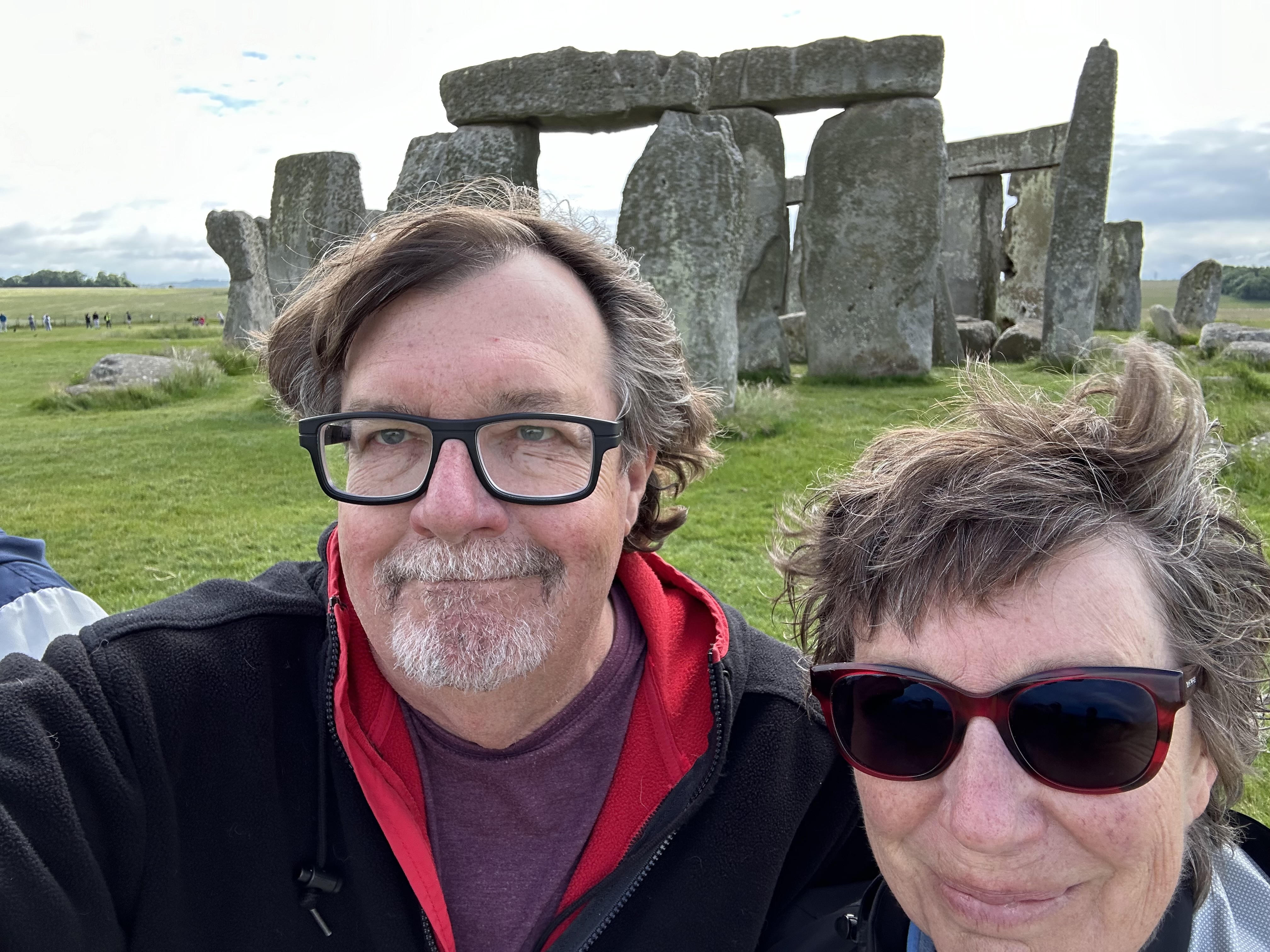
06.08.24 Stonehenge

The ancient Druids did not build Stonehenge.  As a matter of fact, as a consequence of a timeline mismatch they had nothing to do with it.  This monument was constructed during the Neolithic and Bronze Age and predates them by more than 1000 years.  This was long before the Celtic Druids appeared in Britain.  Any association is a 17th-century myth, although ancient Druids may have used the site for rituals just as modern-day Druids do.

As the sun grows warmer we notice small signs of life beneath our feet.  First are the crocuses and daffodils, followed by the bluebells and wood anemones. Many of us view these emergent plants as mere greenery.  Druids see life in all living things including springs, creeks, rivers, rocks and stones.  In Druidry all life is sacred.

One of the great mysteries is the Druid's egg.  Life-giving, it is the egg protected by the hare, which is the symbol of Alban Eilir, - the Festival of the Spring Equinox which means The Light Of The Earth.  As Christianity supplanted pagan festivals Christians today celebrate Easter with eggs courtesy of the Easter bunny.

Happy vernal equinox.   

The astronomical arrival of spring is a consequence of the earth’s tilt on its axis as it orbits around the sun.  Equinox from the Latin aequus (equal) and nox (night) means the the earth’s two hemispheres are receiving the sun’s rays equally.  On this date the sun rises exactly due east and set exactly due west with sunlight striking both hemispheres of the earth equally.   Night and day are approximately equal in length. 

As you observe the movement of the sun across the sky each day you will note that it is shifting toward the north.  Birds and butterflies begin their northward migration as a response to this change in daylight following the path of the sun.
 
It would be premature to pack-away your winter outerwear, return the snow shovels to the shed or plant a garden.  Nevertheless, this is a harbinger of the arrival of astronomical spring for those of us in the northern hemisphere.  
 
The official start time will be tomorrow, March 20, at about 9:46 AM CST (give or take). 

Astronomers base season cycles upon the position of the earth in relation to the sun.  The beginning of Astronomical Spring or the Vernal Equinox marks the time when the sun passes directly above the equator.  Meteorological spring is based-upon annual temperature cycles.  Your weatherman will tell your that meteorological spring begins March 1 and goes thru the end of May.
 
No matter how you slice it the days will grow longer, the temperatures warmer and mud season is in full swing.

Thursday, June 19, 2025

What To See In The June Sky

There is an old saying about making hay while the sun shines - a recognition that farm chores last as long as there is daylight.  The last four weeks have been witness to my neighbors fetching their first cutting of hay; along with spreading manure, tilling, discing and planting.  It has been a busy place here in flyover country. 

We know that the summer solstice tomorrow marks the longest day of the year yet the latest sunset of 2025 doesn't occur on that date.  Let me explain.

Solstice Stone - Stonehenge, UK

The solstice marks the farthest point of advance in the sun's relentless march to the north, delivering the maximum daylight hours of the year for the Northern Hemisphere and the minimum daylight hours of the year for the Southern Hemisphere.  The solstice this month marks the beginning of summer here in the Northern Hemisphere and the winter in the Southern Hemisphere.  

The word solstice literally translates to: sun standing still.  Following this event the sun begins to march in the opposite direction and heads south with our daylight hours getting shorter.  Daylight will continue to dwindle until December 21 - The dark days of the winter solstice - and the first astronomical day of winter after which the process reverses and repeats itself.    

All of this aside, there is a curious paradox in play as a few evenings immediately following the solstice seemingly and inexplicably get brighter.  

If you were to check your Farmers' Almanac sunset tables on pages 150 and 151 you would note that at latitude 40 degrees north the sunset occurs at 8:33 every day from June 21st thru July 3rd.  On June 27th it will set a few seconds later compared to the 26th or 28th.  

What gives?

We all know that following the solstice the days grow shorter so logically the sun should be setting earlier, no?

Here in the northern hemisphere, where you live halfway between the equator and the north pole, on the 27th of June the sun will set just a few seconds later.  While this would seem to defy both logic and the science about days getting shorter; as a consequence of our elliptical orbit around the sun and the phenomenon astronomers call analemma the earth is several million miles farther from the sun and moving at the slowest speed around it. Which would explain the hiccup in the sun setting.

Most of you may not be making hay today; nevertheless, on Friday of next week enjoy a couple of extra seconds of sunlight as you take-in another sunset.

Cheers! 

Thursday, June 20, 2024

Happy Solstice

We returned from almost three weeks of family vacation in the UK last week.

While there, a visit to Stonehenge was in order.

No Druids were involved as this is both a Neolithic religious and astronomical site.

Happy Solstice, people!