Showing posts with label Northern Saw-Whet Owl. Show all posts

Sunday, April 23, 2023

Variety

From the trail camera trap line I bring you a stringer of various critters who have had their images curated over the past month.

Key takeaways?  

Snow on the ground until just recently.

Plenty of variety.

Coyote

Check out the spurs on this gobbler

Striped skunk

Robin

Cranes

Possum

Deer

Crow

Chickadee
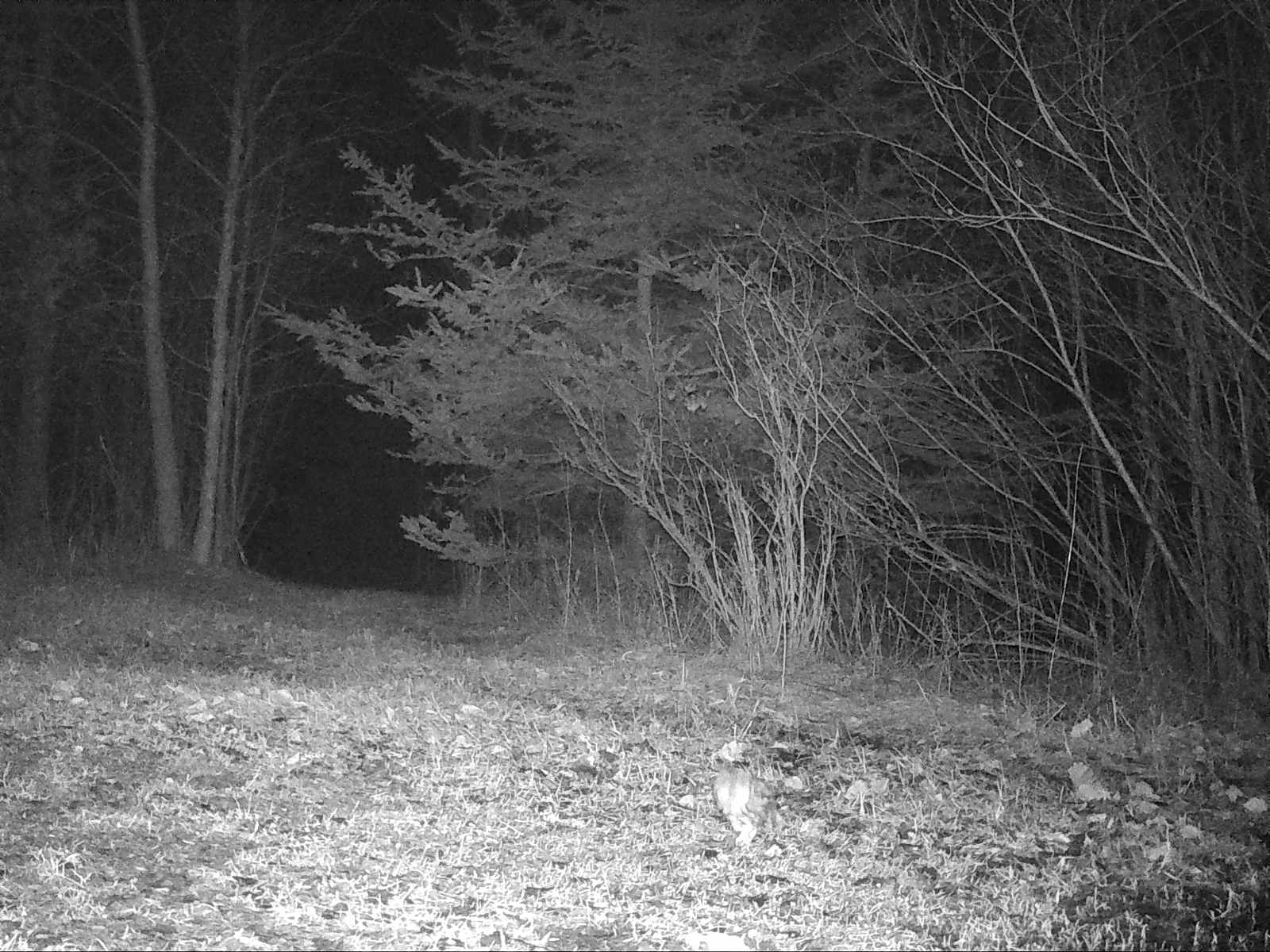
And a teeny, tiny Boreal or Saw Whet owl 

Saturday, November 24, 2018

Sometimes Heard - Rarely Seen

In October a diminutive little owl showed up on one of the trail cameras

Aegolius acadicus - the Northern Saw-Whet Owl - paid a visit to the same location just a few weeks ago.  If you look carefully you might just be able to spot him (or is it her?) in this picture. 

click on the images for a closer look
 
It's not easy as this is the smallest owl in eastern North America and among the smallest on the continent measuring 7-8½ inches in length and weighing-in at a whopping 3 ounces – give or take. 

This is a better photo and there is no mistaking the identification judging from the size of the bird, the lack of ear tufts and a proportionately large head and prominent facial disk. 


I'll have to keep a sharp eye out for this little bird as I've learned they prefer to roost in dense conifer stands just above eye level and near the trunk of a tree.  Supposedly they can be quite tame and approachable in the daytime – if you can find one.


Saturday, October 20, 2018

Sometimes Heard - Rarely Seen

Meet Aegolius acadicus - the Northern Saw-Whet Owl.  This diminutive bird is the smallest owl in eastern North America and among the smallest on the continent measuring 7-8½ inches in length and weighing-in at a whopping 3 ounces – give or take. 

This was a relatively easy ID both as a consequence of the size of the bird, the lack of ear tufts and a proportionately large head and prominent facial disk.  This is an owl of the forest and during daylight hours they prefer to roost in dense conifer stands just above eye level and near the trunk of a tree.  This owl is quite tame and approachable in the daytime – if you can find one.  They prefer to remain motionless and rely-upon concealment amongst dense pine boughs to avoid predators.  A nocturnal hunter its prey is predominantly small rodents such as voles and deer mice. 


This bird generally hasn’t much of anything to say.  However, during the breeding season of March thru May the male vocalizations are a rhythmic tooting song that may go on for hours without missing a beat.  The bird was named for this song - which reminded settlers of the sound of a whetstone sharpening a saw. 


click on images for a closer look